
When comparing air fryers and traditional ovens in the UK, energy efficiency is a key factor for many households. Air fryers generally use less energy than ovens because they cook food faster and require less preheating, making them more cost-effective for small meals and quick cooking tasks. This makes them a popular choice for those looking to reduce their electricity bills and environmental impact.
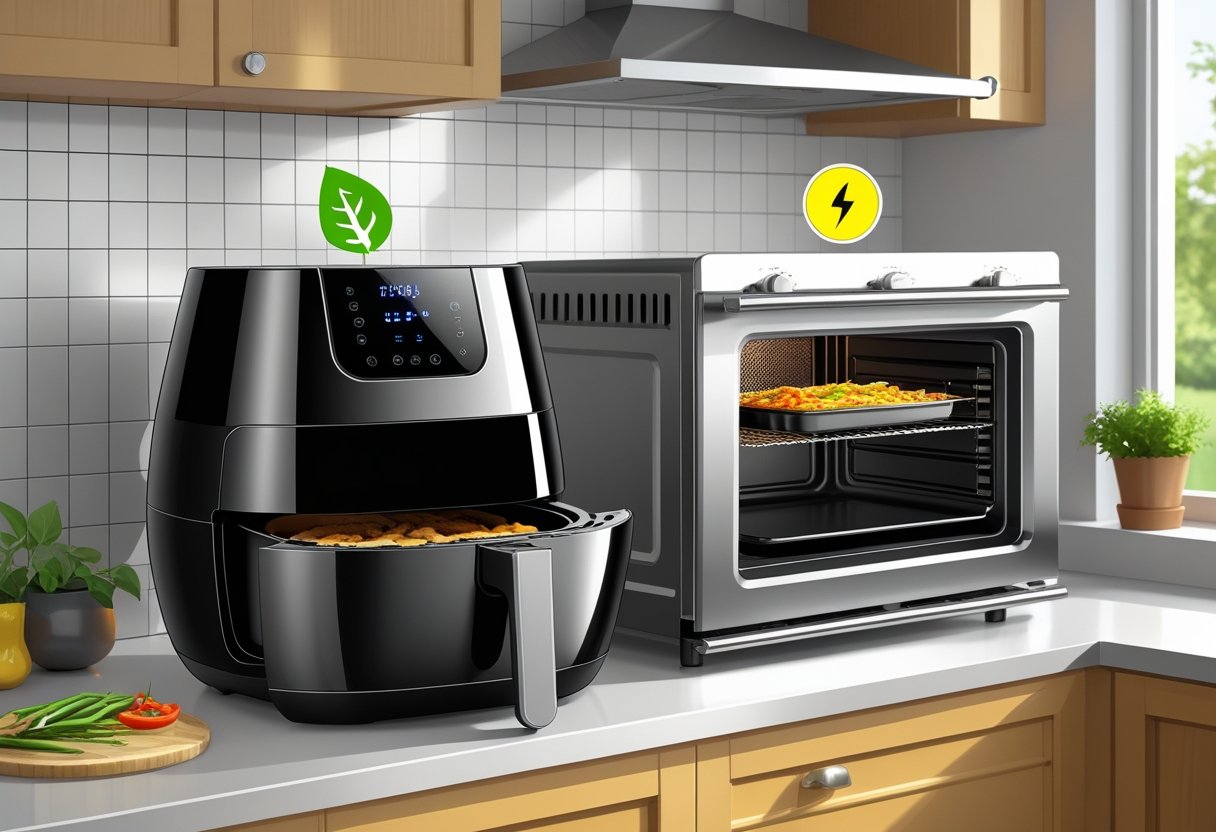
However, the choice isn’t always straightforward. Ovens tend to be better for cooking larger quantities or dishes requiring slower, more even heat, which can affect how energy is used overall. Understanding these nuances helps consumers decide which appliance fits their cooking habits and energy-saving goals best.
Key Takeways
- Air fryers use less energy by cooking faster and with minimal preheating.
- Ovens are often more efficient for larger or slower-cooked meals.
- Choosing the right appliance depends on meal size, cooking style, and energy goals.
Key Differences Between Air Fryers and Ovens
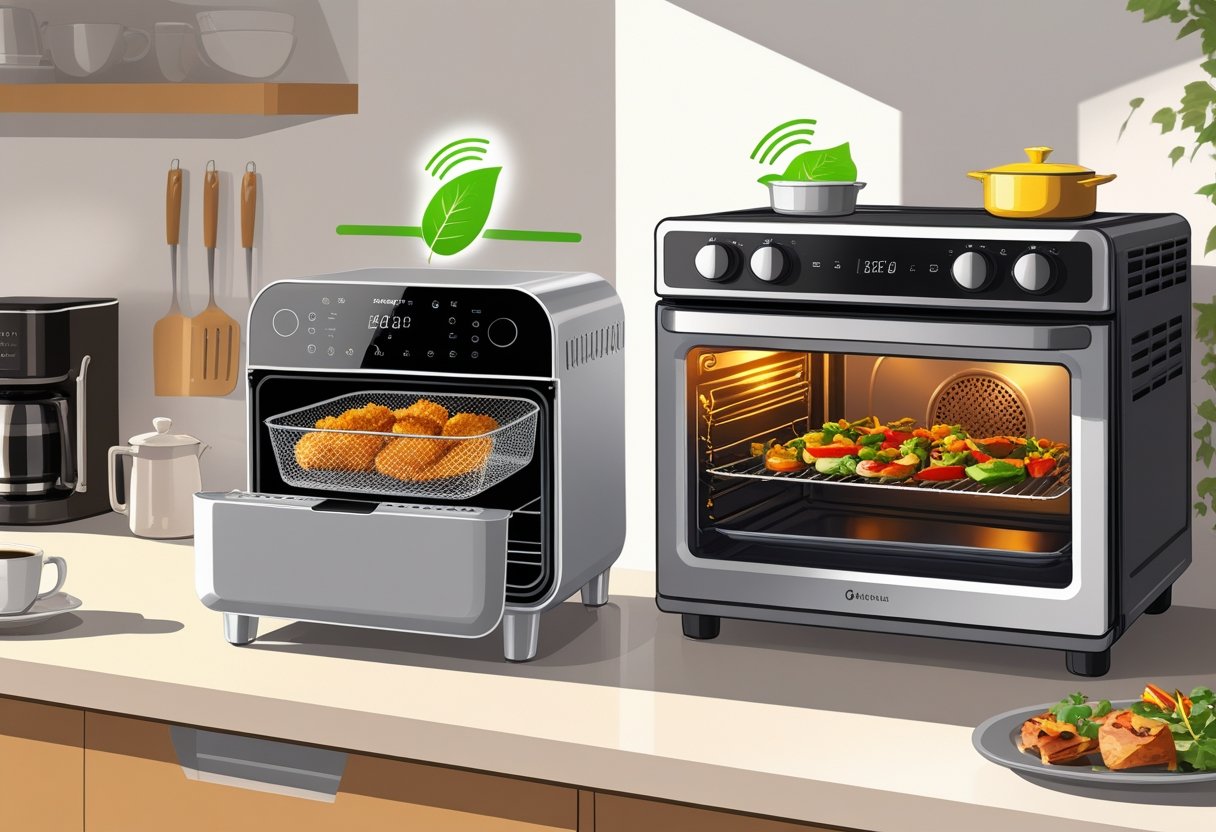
Air fryers and ovens differ mainly in size, cooking method, and energy consumption. While ovens offer greater capacity and versatility, air fryers excel in speed and efficiency, especially for smaller portions. These contrasts affect their performance and suitability in everyday cooking.
How Air Fryers Operate
Air fryers cook food using a compact heating element combined with a high-speed fan. This fan circulates hot air rapidly around the food, creating a crispy exterior without needing large amounts of oil. They typically run on lower wattage, ranging from 400 to 2000 watts.
Because of their smaller size, air fryers require less preheating time and less electricity. This makes them more energy-efficient for quick meals or cooking small portions.
They are countertop kitchen appliances designed for convenience and speed. However, their limited capacity means they are less suited for large meals or multiple dishes at once.
How Ovens Operate
Conventional ovens use heating elements located at the top and/or bottom of the oven cavity to cook food through radiant heat. Many ovens include fans for convection cooking, which improves heat distribution but typically operates slower than air fryer fans.
Ovens generally run at higher wattage—around 2500 watts or more—and require more time to preheat. They have larger internal spaces, allowing for cooking multiple or large meals simultaneously.
Ovens are versatile kitchen appliances capable of baking, roasting, grilling, and more. Their size and settings suit a wide range of cooking methods but can lead to higher energy consumption for small or quick dishes.
Overview of Rapid Air Circulation
The defining feature of an air fryer is its rapid air circulation. This technology efficiently moves hot air around the food at high speeds, creating a crisp texture similar to frying but with less oil.
In contrast, ovens, including conventional and convection types, circulate hot air slower and less evenly. This results in longer cooking times and more energy use in comparison.
Rapid air circulation allows air fryers to cook food faster and more evenly in a smaller space. This benefits energy savings and reduces cooking time but limits the size of the meals cooked.
Types of Meals Best Suited for Each Appliance
Air fryers are ideal for quick meals, snacks, and small portions such as fries, chicken wings, or vegetables. Their efficiency and speed suit individual or small household cooking needs.
Ovens better handle large meals and multiple dishes. They accommodate roasts, casseroles, baked goods, and bulk cooking that air fryers cannot manage due to size constraints.
For versatile cooking styles requiring slow roasting, baking, or broiling large amounts of food, an oven remains the preferred kitchen appliance. Air fryers serve well as a complementary appliance for fast, energy-efficient cooking of smaller, simpler meals.
Energy Consumption and Efficiency in the UK
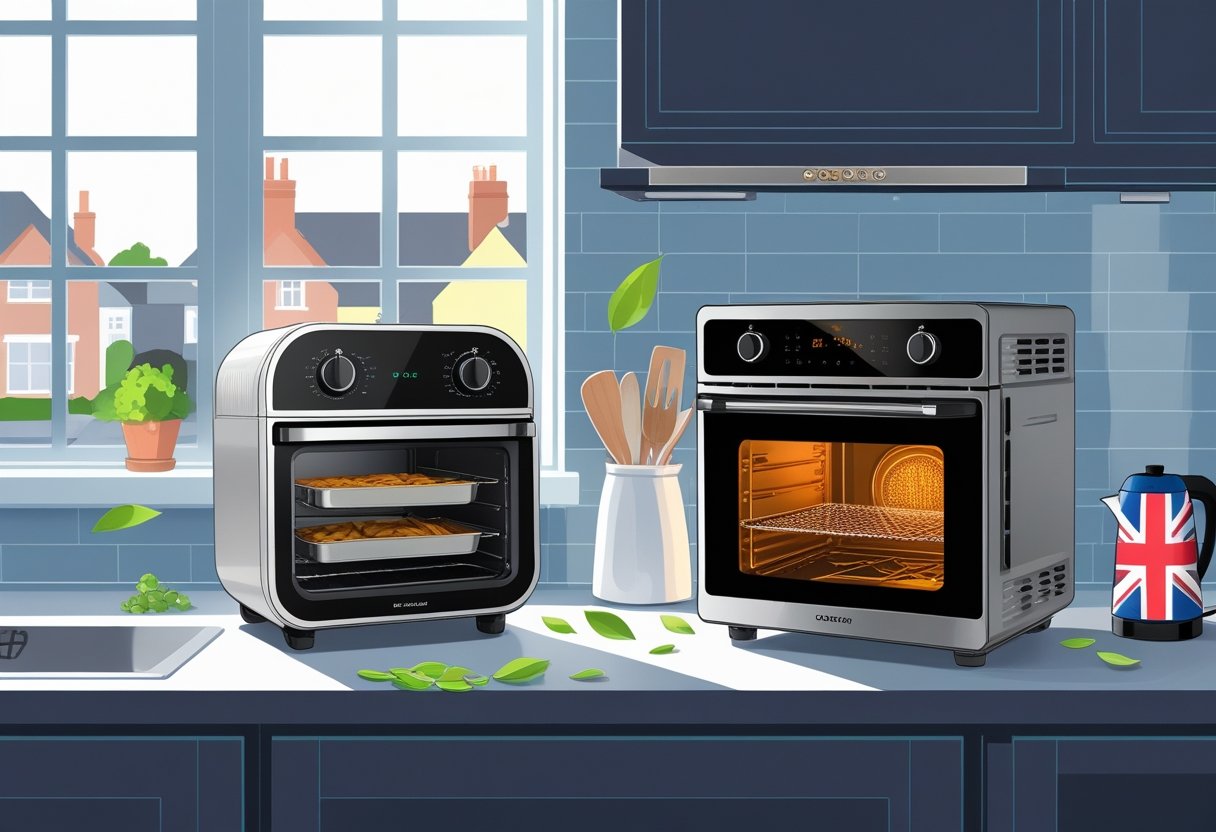
Energy use when cooking varies widely between air fryers and conventional ovens, depending on factors like wattage, cooking time, and batch size. The efficiency of each appliance can shift considerably based on how they are used, especially regarding preheating and the volume of food cooked.
Typical Wattage Comparison
Air fryers generally operate at lower wattages than conventional ovens, typically ranging between 1400W and 1800W. In contrast, electric ovens in UK households often draw between 2000W and 3000W during cooking. This difference in power consumption significantly affects total energy use, with air fryers using less electricity per minute of operation.
However, wattage alone doesn’t determine energy efficiency. Usage patterns such as cooking temperature and duration also contribute. Air fryers tend to cook food at higher temperatures but for shorter periods, which can offset their wattage advantage in some cases.
Electricity Usage Per Cooking Session
Electricity usage per cooking session is often lower with air fryers, due to shorter cooking times and absence of extended preheating. An air fryer cooking cycle usually lasts 15 to 30 minutes, whereas ovens may run for 30 to 60 minutes or more, depending on the dish.
Costs per session in the UK can range from around 2p to 6p for air fryers, while ovens can cost twice as much or more, depending on wattage and duration. For meals requiring moderate quantities, air fryers typically provide better energy efficiency, helping consumers reduce both wattage consumption and electricity bills.
Preheating and Cooking Duration Impact
Preheating has a significant impact on the total energy consumed by ovens. They may take 10-15 minutes to reach the desired temperature, often around 180°C to 220°C, before cooking begins. This extra energy consumption increases overall electricity use even before food is placed inside.
Air fryers usually require minimal or no preheating, which reduces wasted energy. Shorter cooking durations also limit energy consumption further. Combined, these factors make air fryers more energy-efficient for quick meals or snacks compared to ovens, where longer preheating and cook times inflate power use.
Batch Cooking and Small Portions
Batch cooking favours ovens in terms of energy efficiency when cooking large quantities. Ovens can accommodate bigger volumes at once, making the energy use per portion lower as the appliance heats large amounts of food simultaneously.
For small portions, air fryers are more efficient since their compact size heats food quickly without wasting energy on empty space. This makes air fryers ideal for single servings or small household meals. Users should consider meal size and frequency to choose the appliance best suited for their cooking needs and energy goals.
Cost Analysis: Air Fryer vs Oven
Energy use, purchasing costs, and upkeep all affect how much an appliance will cost a household over time. Understanding these elements helps determine which cooker saves more on the energy bill in typical UK homes.
Initial Purchase Price Overview
Air fryers usually range from £50 to £150, depending on size and brand. This upfront cost is significantly lower than that of ovens, which often start around £300 for basic models and can exceed £1,000 for premium built-in options.
Consumers seeking a budget-friendly appliance often find air fryers more accessible. However, ovens offer multifunctionality beyond frying, such as baking and roasting large quantities. The choice of appliance depends on cooking needs and available kitchen space.
Long-Term Energy Bill Comparison
Air fryers cook food faster and use less electricity per session, which can reduce energy bills by up to 50% compared to ovens for small portions. Studies show that air fryers use 70-80% less energy for similar meals, thanks to their compact size and rapid heating.
Ovens generally consume more electricity as they take longer to heat and cook. Using an oven for large or batch cooking may offset some energy inefficiencies but leads to higher costs for quick, small meals.
Maintenance and Lifespan Considerations
Ovens tend to have a longer lifespan, often lasting 10-15 years with regular use and maintenance. Air fryers generally last between 3-5 years, depending on frequency of use and care routines.
Routine cleaning and occasional repairs impact the total cost over time. Ovens may incur higher repair costs, while air fryers’ lower replacement cost balances this out. Regular maintenance affects energy efficiency in both cases.
Electricity Costs for Typical UK Households
Electricity tariffs in the UK average around 34p per kWh as of late 2025. Cooking a small meal in an air fryer generally costs between £0.10 and £0.30, depending on meal size and appliance power rating.
For the same meal, using a standard electric oven could cost between £0.18 and £0.50 per use. Households cooking multiple small meals daily can see noticeable savings by choosing an air fryer for these tasks while reserving the oven for larger meals.
Performance and Cooking Results
The air fryer and oven differ significantly in cooking times, versatility, and the quality of food textures and flavours. Each appliance suits different meal types and cooking styles, affecting how efficiently a user can prepare meals and the final dish quality.
Time to Cook Different Types of Meals
Air fryers excel at reducing cooking time due to their compact size and rapid air circulation. For quick meals like frozen snacks or reheated leftovers, they often cut cooking times by up to 30-50% compared to conventional ovens.
Ovens, while slower to heat and cook, handle larger batches better, making them preferable for cooking larger meals or multiple items simultaneously. Preheating times for ovens can range from 10 to 15 minutes, whereas air fryers typically reach cooking temperatures nearly instantly.
For everyday meal prep, air fryers save time, especially when cooking small-to-medium portions. Ovens remain ideal for bulk cooking but take longer overall.
Baking, Roasting, and Grilling Capabilities
Ovens provide more consistent and even heat distribution, which is essential for baking and roasting larger cuts of meat or multiple trays of food. They maintain steady temperatures necessary for cakes, bread, and casseroles.
Air fryers offer roasting and grilling functions but on a smaller scale. Their circulating heat makes them well-suited to smaller roasts and grilled items, though results may vary with very thick or large pieces due to size constraints.
For roasting and grilling, ovens are more versatile for large or complex dishes, while air fryers provide a convenient, faster alternative for smaller portions but with some size limitations.
Texture and Flavour Comparison
Air fryers create a crispier texture thanks to high-speed hot air circulation, often mimicking deep-fried results without excess oil. This is well suited for foods like fries, chicken wings, and breaded items.
Ovens can achieve similar textures but often require longer cooking times and sometimes additional steps like broiling. Oven cooking tends to deepen flavour profiles through slower roasting and can produce juicier interior textures in meats due to gradual heat application.
Both appliances can produce high-quality results, but air fryers focus on speed and crispness, while ovens provide more control over flavour development and moisture retention.
Environmental Impact and Carbon Footprint
Energy consumption, emissions, and sustainable habits influence the environmental impact of cooking appliances. Understanding these factors helps determine which device is better suited to reducing carbon output during everyday food preparation.
Overall Energy Use and Emissions
Air fryers generally consume less electricity than conventional ovens due to their smaller size and faster cooking times. This efficiency leads to lower direct energy use per cooking session. For example, heating an oven takes significantly longer and uses more power than an air fryer’s rapid hot air circulation.
Despite both appliances relying on electricity, the source of that electricity also affects emissions. Using renewable or low-carbon energy further reduces the carbon footprint of either option. However, on average, air fryers emit fewer carbon emissions per use compared to ovens because their shorter operation times result in less total power consumption.
Effect on Household Carbon Emissions
Switching to an air fryer can lead to a measurable decrease in household carbon emissions over time. If a family regularly cooks meals in an oven, replacing some sessions with an air fryer could reduce cumulative emissions by a notable margin, thanks to energy savings.
In the UK context, where electricity increasingly comes from renewable sources, reducing appliance runtime translates directly into lower carbon output. Additionally, air fryers avoid the need to preheat, a practice that limits unnecessary energy usage in ovens. These factors combined help air fryers contribute to a smaller carbon footprint for kitchen cooking activities.
Sustainability in Everyday Meal Prep
In daily use, the sustainability of air fryers versus ovens also depends on cooking habits and meal types. Air fryers excel at quickly cooking smaller portions, avoiding excess energy waste often caused by heating a large oven cavity.
Users can further enhance environmental benefits by choosing meals that require less oil and utilising the air fryer’s precise heat control. Minimising food waste and selecting energy-efficient appliances supports an overall reduction in environmental impact. Thus, the integration of air fryers into routine cooking can be a practical step towards greener kitchens.
Choosing the Right Appliance for Your Needs
Selecting between an air fryer and an electric oven depends on household size, cooking habits, and desired versatility. Energy efficiency, cooking capacity, and the range of dishes each appliance handles are important factors to consider.
Suitability for Small and Large Households
Air fryers are well-suited for small households due to their compact size and quick cooking times. They use less energy by heating smaller cooking chambers and food portions. This efficiency reduces energy consumption when cooking meals for one or two people.
Electric ovens are better for larger households where cooking bigger portions or multiple dishes simultaneously is common. Although ovens consume more energy overall, their larger capacity avoids the need for multiple batches, which can offset extra energy use. For big families, electric ovens can be more practical despite longer preheating and cooking times.
Versatility and Everyday Use
Electric ovens provide greater versatility, supporting baking, roasting, grilling, and slow cooking. They accommodate a wide variety of kitchen appliances and cookware sizes, making them central to daily cooking.
Air fryers excel at producing crispy, fried-like results with less oil and in shorter times. While some models offer additional functions like baking or roasting, their smaller size limits the range of dishes and cookware that fit inside. They are ideal for quick cooking, snacks, and reheating but less effective for complex or large meals.
Summary of Pros and Cons
| Appliance | Pros | Cons |
|---|---|---|
| Air fryer | Energy-efficient, fast cooking, compact | Limited capacity, less versatile |
| Electric oven | Large capacity, versatile cooking modes | Higher energy use, slower heating |
Choosing the right appliance should reflect household size, typical meal requirements, and which cooking functions are most frequently used. Both have roles in a modern kitchen but serve different needs effectively.
Frequently Asked Questions
Energy use and costs vary between air fryers and ovens depending on factors such as appliance size, cooking time, and usage frequency. Both have advantages and limitations depending on the cooking method and meal type.
Does an air fryer use less electricity than a traditional oven in the UK?
An air fryer typically uses less electricity because it cooks food faster and heats a smaller space compared to a traditional oven. This reduced cooking time lowers overall energy consumption.
Is it more energy-efficient to cook with an air fryer or an oven for most meals?
For most meals, air fryers tend to be more energy-efficient due to quicker cooking times and focused heat distribution. However, for larger or bulk cooking, ovens may be more efficient as they can handle more food at once.
What are the energy consumption differences between an air fryer and a convection oven?
Both use convection technology, but air fryers usually consume less energy due to smaller cavities and shorter cooking durations. Convection ovens are larger and take longer to preheat and cook, leading to higher energy use.
How does the cost of operating an air fryer compare to that of an oven in the UK?
Operating an air fryer generally costs less per use, as it requires less electricity and cooks faster. The exact cost difference depends on factors like electricity rates, appliance wattage, and cooking habits.
Can an air fryer be a cost-effective alternative to an oven for British homes?
Yes, especially for small households or quick meals, an air fryer can be more cost-effective by saving both energy and time. For larger families or batch cooking, an oven might remain the more practical choice.
In terms of energy usage, what are the pros and cons of using an air fryer versus an oven?
Air fryers use less energy due to smaller size and faster cooks but can be limited in volume. Ovens handle larger quantities and offer versatile cooking but consume more energy and take longer to operate. Efficiency depends on meal size and cooking requirements.
Last Updated on 12 December 2025 by YEG