
Controlling air quality and damp is essential for maintaining a comfortable and healthy home environment in the UK. Dehumidifiers are popular appliances designed to reduce excess moisture in the air, which helps prevent mould growth, dust mites, and structural damage caused by damp. They work by extracting water from the indoor air, making living spaces feel fresher and protecting furnishings and walls.
Dehumidifiers come in various types and sizes, suited for different rooms and usage levels. Portable electric models are the most common for home use, with features like adjustable humidity settings, water tank indicators, and energy-saving modes. Choosing the right dehumidifier depends on room size, moisture levels, and power efficiency.
When buying a dehumidifier, running costs are a key consideration. Energy consumption will impact your electricity bill, especially if it runs frequently or is used in large spaces. Understanding the typical power usage and how it translates into cost helps make an informed purchase that balances performance and affordability. We analysed the factors influencing dehumidifier running costs to clarify what to expect when using one in UK homes.
Best Dehumidifiers for Running Cost Efficiency
We have compared a range of dehumidifiers to help you find models that balance performance with energy use. Our selection focuses on options that keep running costs manageable while effectively controlling damp and improving air quality.
Pozxiol 1.8L Portable Dehumidifier

This dehumidifier is a solid choice for those needing efficient, low-noise moisture control in small to medium spaces.
Pros
- Quiet operation ideal for bedrooms
- Large 1.8L tank reduces emptying frequency
- Auto shut-off and defrost features add convenience and safety
Cons
- Limited water extraction for larger or very damp areas
- Plastic buttons can feel flimsy over time
- Not designed for drying clothes directly
After using the Pozxiol for several days, we noticed a clear drop in dampness in our bedroom and bathroom. The low noise level made it easy to run overnight without disturbing sleep. The tank size meant fewer interruptions for emptying, which was a practical benefit.
The auto defrost worked smoothly in colder conditions, avoiding any frost build-up, which keeps performance consistent throughout the year. Adjusting settings was straightforward, and the subtle LED lighting added a gentle ambience rather than being distracting.
While the moisture removal is effective for rooms up to 50 square metres, it may struggle in very humid or larger spaces. We also found that it’s not suited for drying clothes, but shines as a general-purpose dehumidifier to improve air quality in daily living areas.
DSL 12L Dehumidifier
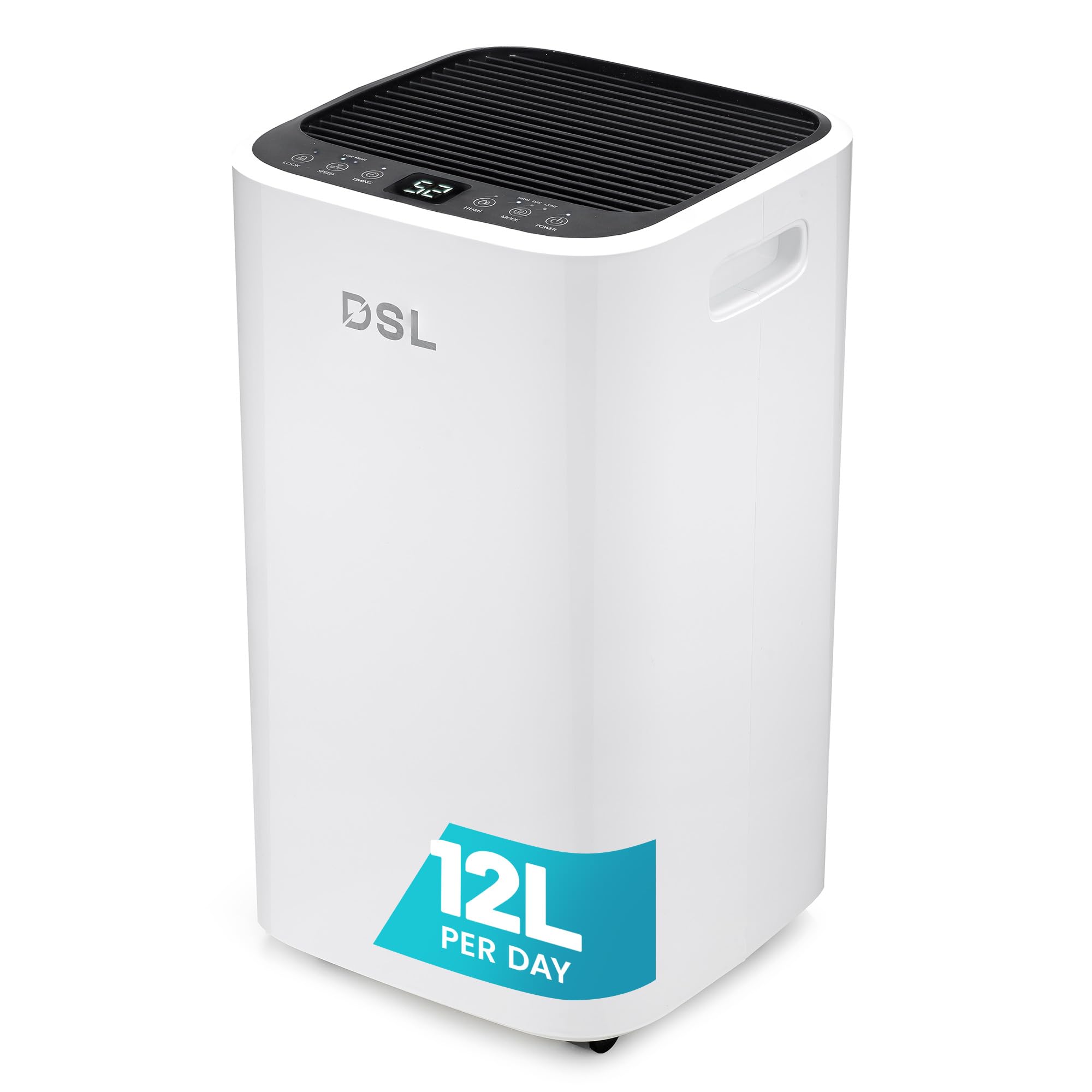
We found this dehumidifier effective for tackling damp in medium-sized rooms while keeping energy use reasonable.
Pros
- Removes moisture efficiently up to 12 litres daily
- Quiet operation suitable for bedrooms and living areas
- Laundry mode speeds drying indoors, saving on tumble dryer costs
Cons
- Water tank can be tricky to remove without spilling
- Emits a slight cold air draft when running
- Tank fills quickly if continuously used on laundry mode
The DSL 12L does well managing damp and condensation in rooms up to around 130 square feet. Its digital control helps us keep humidity levels stable and comfortable. The quiet sleep mode makes it easy to run overnight without disruption.
We especially liked the laundry drying function as a practical alternative during wet weather, which uses less energy than a tumble dryer. The compact design is light enough to move between rooms, though the water tank’s removal could be smoother to avoid spills.
Overall, this model offers solid humidity control with energy efficiency for typical UK homes, balancing noise, drying power, and ease of use well. For the price, it suits anyone needing reliable moisture reduction without extra features getting in the way.
Cormenta 1800ML Dehumidifier
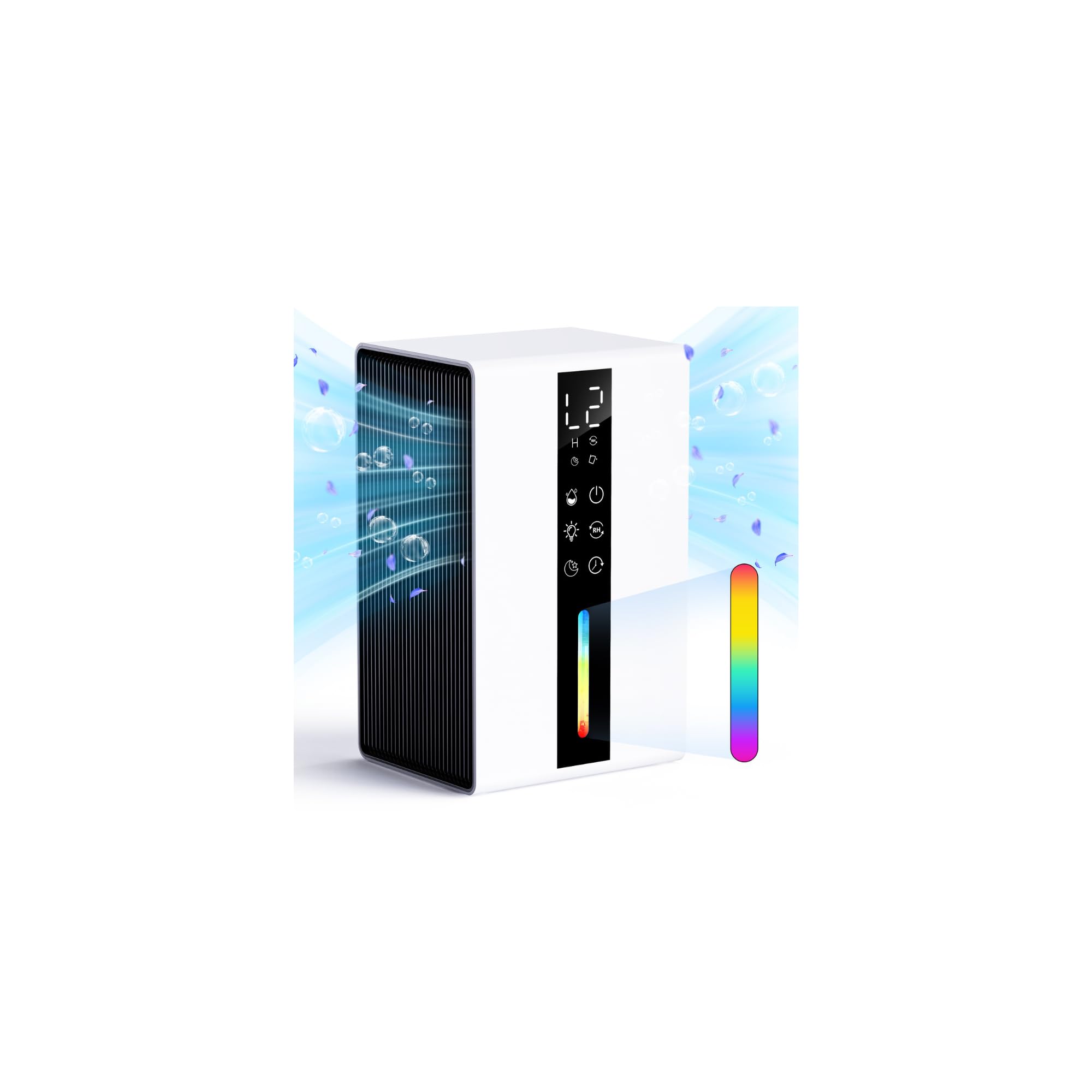
A solid option for keeping home humidity in check efficiently without increasing your energy bills significantly.
Pros
- Very quiet operation, suitable for bedrooms and offices
- Large 1800ml tank means less frequent emptying
- Auto mode maintains set humidity without constant adjustments
Cons
- Struggles in larger or extremely damp rooms
- Small footprint limits water extraction capacity
- Ambient lighting not for everyone
We found the Cormenta dehumidifier impressively quiet during use, making it easy to run overnight without disturbance. The auto humidity control took most of the guesswork out, activating only when moisture levels rose above 50%.
The large tank was convenient, lasting up to a week before needing emptying. However, it does suit smaller spaces better, as it struggled to reduce humidity quickly in bigger rooms.
Its compact design is easy to move around, but we noticed the ambient light feature might be distracting for those expecting a simple utility device. Overall, it saves energy while managing damp effectively in average UK homes.
CosmartAir Compact Dehumidifier
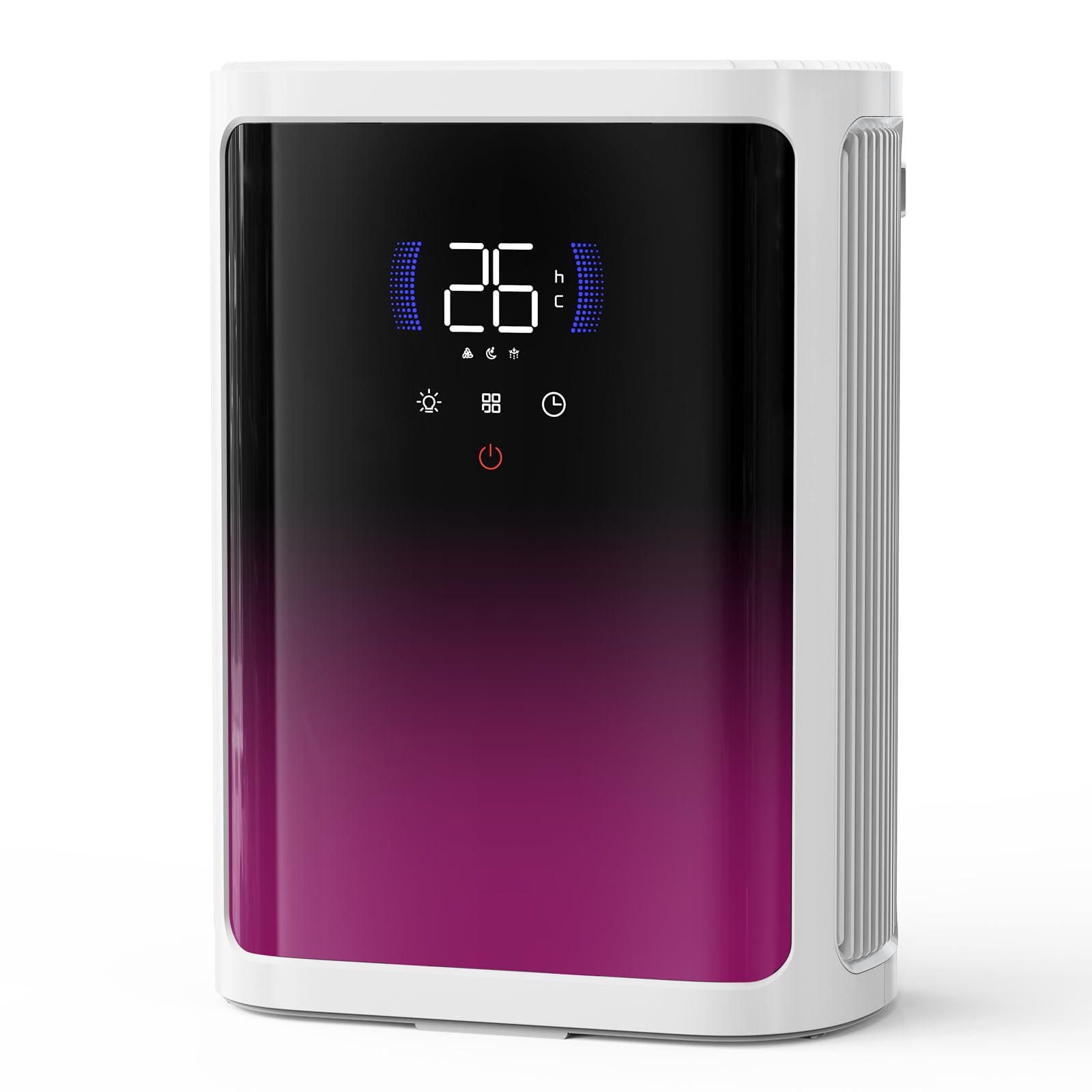
This dehumidifier is a reliable choice for small spaces, balancing quiet operation and effective moisture removal with convenient features.
Pros
- Efficient moisture extraction without interruption thanks to auto-defrost
- Large 2800ml tank reduces emptying frequency
- Quiet operation with useful timer and sleep mode
Cons
- Best performance requires doors and windows to remain closed
- May struggle in very damp or large areas beyond recommended size
- Light settings may be unnecessary for some users
We found the CosmartAir dehumidifier easy to set up and immediately effective in tackling dampness in bedrooms and studies. Its auto-defrost system worked well during cooler temperatures, avoiding performance drops we’ve seen in other devices.
The large transparent water tank is practical, letting us know exactly when it needs emptying. The timer and sleep mode allowed us to schedule operation and enjoy undisturbed rest, as the unit runs softly and dims lights automatically.
While it works best in enclosed spaces, this dehumidifier noticeably improved indoor air quality for us, helping reduce condensation and speeding up drying times for clothes in winter. Its simple yet stylish design also fits modern interiors without being intrusive.
Pro Breeze Portable Dehumidifier
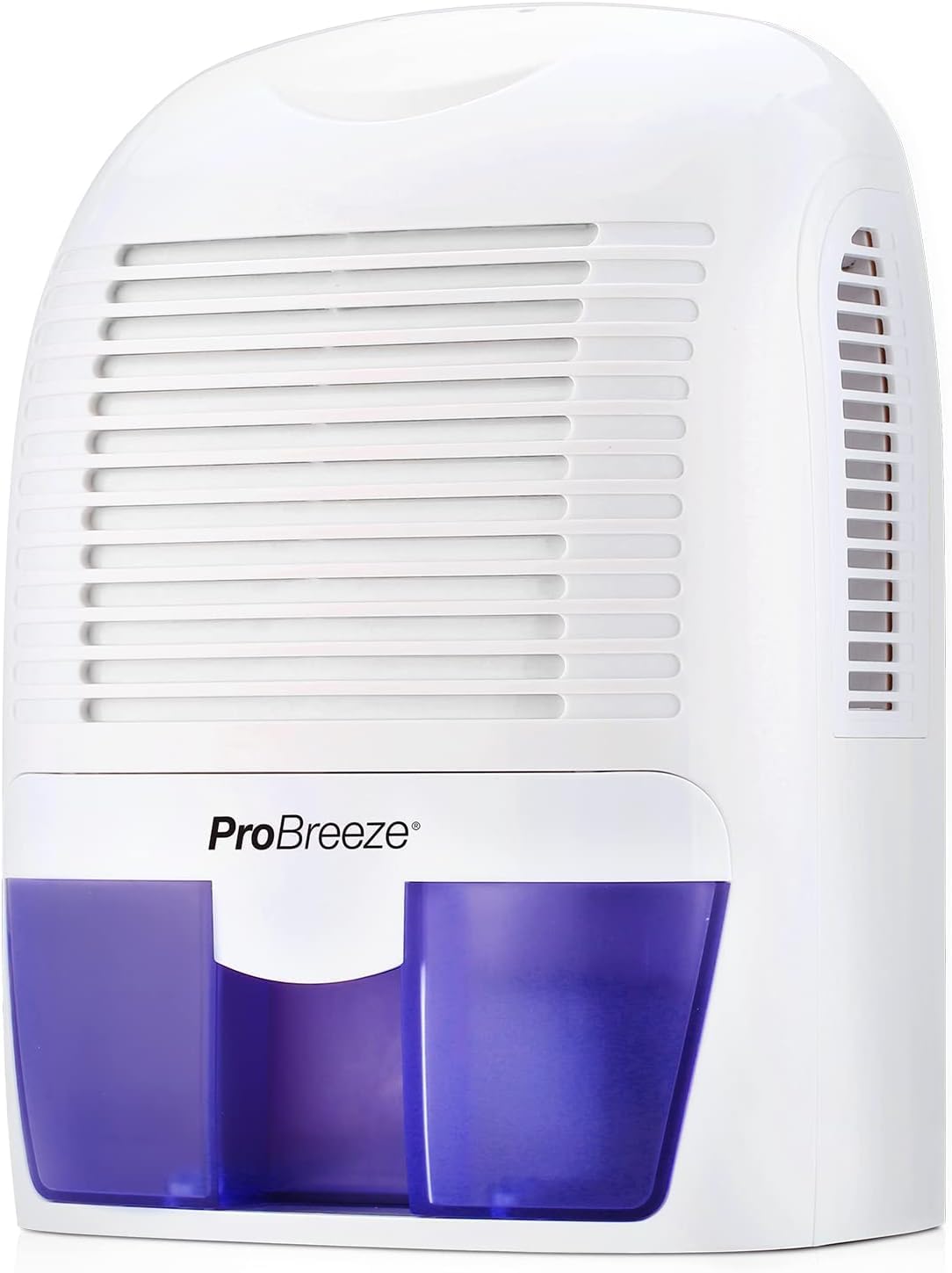
This compact dehumidifier is a sensible choice for smaller rooms thanks to its efficient moisture removal and low running costs.
Pros
- Uses very little energy, costing as low as 1p per hour
- Operates quietly without disturbing daily routines
- Simple tank design makes emptying and cleaning straightforward
Cons
- Limited to smaller spaces, not ideal for large areas
- Single speed means no customisation of drying power
- Basic appearance may not suit all room decors
We found the Pro Breeze dehumidifier easy to place in bedrooms and bathrooms due to its small size. It effectively collects noticeable amounts of water within a few hours, helping to reduce damp and mould.
The whisper-quiet operation is a real advantage when used overnight or in offices. We appreciated the auto shut-off, which prevents overflow and signals when the tank needs emptying.
While it’s not designed for larger rooms, the energy savings make it ideal for targeted damp control. Its straightforward functionality means minimal fuss in day-to-day use.
Buying Guide
When choosing a dehumidifier, consider the size of the space you want to treat. Larger rooms require models with higher extraction capacities, usually measured in litres per day. This ensures efficient moisture removal without excessive energy use.
Next, we look at the energy efficiency of the unit. Energy-efficient models help keep running costs down, which is important for frequent or long-term use. Check for an energy rating or power consumption details before purchasing.
Features like adjustable humidity settings, built-in humidistats, and automatic shut-off improve ease of use and efficiency. Some units offer continuous drainage options, which can be more convenient for damp areas.
| Feature | Importance |
|---|---|
| Extraction capacity (L/day) | Must suit room size |
| Power consumption (Watts) | Affects running costs |
| Humidity control | Maintains desired moisture levels |
| Noise level | Important for living spaces |
| Portability | Useful if moving between rooms |
| Water tank capacity | Larger tanks need less frequent emptying |
We also consider noise levels, especially if the dehumidifier will run in bedrooms or living rooms. Units with lower noise are preferable for comfort.
Finally, look at maintenance requirements. Cleanable filters and accessible water tanks make upkeep simpler and extend the lifespan of the device.
Frequently Asked Questions
We explore practical details around calculating daily costs, typical energy use, and how budget dehumidifiers perform. Guidance on running times and efficiency improvements help us manage expenses effectively. Insights into potential savings with energy-efficient models complete the picture.
How can I calculate the daily running costs of a dehumidifier in the UK?
To calculate daily running costs, multiply the device’s power consumption (in kilowatts) by the number of hours it runs per day. Then, multiply that result by the current electricity price per kWh.
For example, if a dehumidifier uses 0.3 kW and runs for 8 hours at 34p per kWh, the cost is 0.3 × 8 × £0.34 = £0.82 per day.
What are the typical energy consumption rates for dehumidifiers in UK households?
Common household dehumidifiers usually consume between 200W and 600W, depending on their capacity. Smaller units will use less power, often around 0.2 to 0.4 kW per hour.
Larger or commercial models can exceed 0.6 kW, but these are less common in typical UK homes.
How cost-effective are dehumidifiers from budget supermarkets like Lidl and Aldi according to reviews?
Budget dehumidifiers from Lidl and Aldi often perform adequately for small spaces and short-term use. Reviews suggest they offer reasonable energy consumption rates but may lack advanced efficiency features.
Their lower upfront cost can be offset by slightly higher running costs compared to premium models.
What guidelines exist for the optimal daily operation time of a dehumidifier to maintain efficiency?
Running a dehumidifier for 4 to 8 hours daily is generally recommended to balance moisture control and energy use.
Continuous operation is unnecessary unless humidity levels are very high or persistent.
Can you provide insights on ways to improve dehumidifier efficiency to reduce running costs in the UK?
Ensure the room is well insulated to reduce moisture ingress. Regularly clean filters and coils to maintain airflow and performance.
Using the device during warmer parts of the day can increase efficiency, as dehumidifiers work better at higher temperatures.
What are the potential savings on running costs when using a dehumidifier with energy-efficient features?
Energy-efficient models with humidity sensors and automatic shut-off can reduce electricity use by 20-30%.
Features like variable-speed compressors adjust power based on need, minimising unnecessary energy consumption. Investing in these models lowers running costs over time.
Last Updated on 22 December 2025 by YEG