
Drying clothes indoors is a common necessity, especially in the UK where weather conditions often prevent outdoor drying. However, indoor drying can lead to issues like dampness and poor air quality, which affect both health and the condition of your home. Understanding how to dry clothes inside without causing these problems is essential for maintaining a comfortable living environment.
Indoor drying solutions vary widely, from traditional clothes racks to modern dehumidifiers and ventilation systems. Each option aims to reduce moisture build-up, but some are more effective than others depending on room size, ventilation, and how frequently clothes need drying. Selecting the right setup involves considering airflow, humidity control, and how much space you can dedicate to drying laundry.
Key factors to pay attention to when choosing a method include the device’s moisture extraction efficiency, the space it occupies, energy consumption for powered options, and how it integrates with your home’s ventilation. Our research focused on practical ways to reduce dampness and maintain air quality while drying clothes indoors. We tested and reviewed methods that keep homes dry and fresh without compromising comfort or convenience.
Best Products for Drying Clothes Indoors Without Causing Damp
We’ve compiled a selection of effective products designed to help you dry clothes indoors while minimising the risk of damp. Our list focuses on practical solutions suitable for UK homes, ensuring better air quality and moisture control.
HumiZap Laundry Dehumidifier

This dehumidifier is a reliable choice for drying clothes indoors without causing damp, especially suited for UK homes facing humid conditions.
Pros
- Effectively removes moisture, helping to prevent mould and bad smells
- Runs quietly with low energy consumption, ideal for leaving on during the day
- Includes a clear water tank and an auto-drainage option for continuous use
Cons
- Water tank capacity could be bigger, requiring more frequent emptying
- Slight vibration on start-up but no impact on performance
- Smaller footprint means limited coverage if used in very large rooms
We found this unit to be highly efficient at reducing humidity in typical indoor spaces, enabling clothes to dry faster without causing damp patches. Its laundry mode specifically targets moisture from clothes drying, which is a useful feature for those rainy UK days.
The low noise level meant it could run in bedrooms or living areas without disturbance. Plus, the ability to set target humidity levels and monitor them via the digital display gave us clear feedback and control.
The compact size allowed us to fit it easily in tight corners, although the tank needed emptying quite regularly. The continuous draining feature with a hose is perfect if you want a hands-off experience.
Overall, it gave us confidence that indoor drying need not worsen damp issues when managed properly with this device.
Dryzone Dehumidifier & HEPA Air Purifier
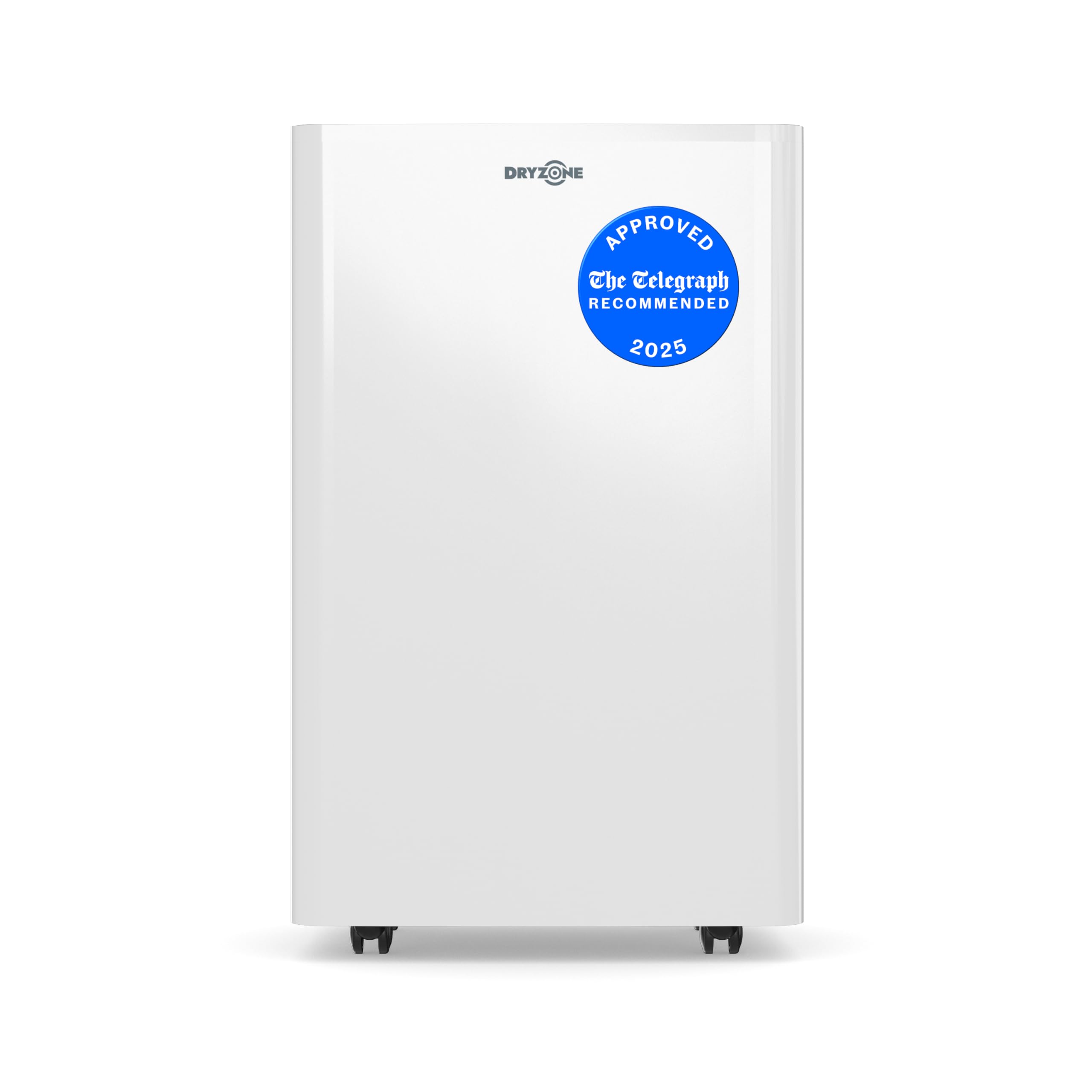
This device offers an effective way to dry clothes indoors without causing damp by controlling humidity and purifying the air simultaneously.
Pros
- Efficiently reduces moisture and prevents mould in rooms
- Quiet operation suitable for bedrooms and living spaces
- Useful laundry drying mode speeds up indoor drying safely
Cons
- Water tank requires frequent emptying with heavy use
- Slightly bulky to move around despite wheels
- Higher initial cost compared to basic dehumidifiers
Using the Dryzone, we noticed how rapidly it pulled moisture from the air, making it easier to dry clothes inside without that usual damp smell. The HEPA filter also improved air quality, removing pollen and dust, which is a bonus for those sensitive to allergens.
Its whisper-quiet operation means it can run overnight without disturbing sleep, especially in the dedicated Sleep Mode that dims lights and slows the fan. This made it easier for us to keep windows closed in cold weather while still drying laundry indoors.
Moving the unit around is relatively easy thanks to the wheels, though at 11kg it isn’t light. The 2-litre water tank fills up quickly when using the laundry mode, so emptying it regularly is necessary. Overall, this feels like a well-rounded option for anyone tackling damp and drying clothes inside in the UK.
Zero In Wardrobe Dehumidifier – 300g Lavender
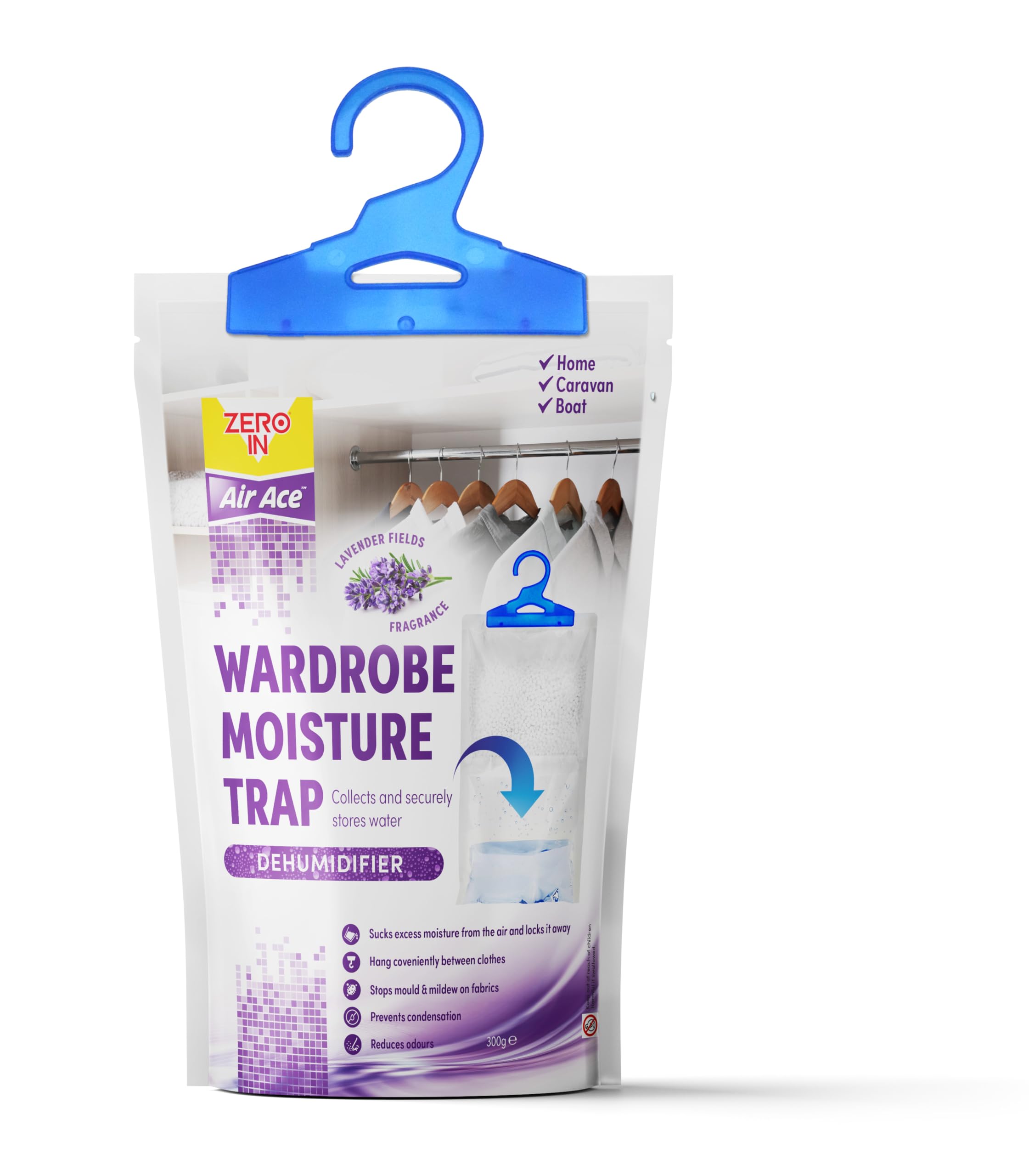
This dehumidifier works well to keep our wardrobes dry while adding a gentle lavender scent that helps avoid damp and musty smells.
Pros
- Effectively reduces moisture, helping prevent mould and mildew
- Pleasant lavender fragrance freshens small spaces
- Compact design fits neatly in wardrobes or closets
Cons
- Limited to small spaces due to size and capacity
- Needs regular replacement for continuous effectiveness
- Lavender scent might be subtle for some users
We found it straightforward to hang inside a wardrobe using the convenient hook. It noticeably cut down on damp air and stopped our clothes from smelling musty.
The lavender fragrance provides a soft and calming tone, which makes opening the wardrobe a nicer experience. It’s not overpowering, just a subtle fresh scent over time.
For anyone looking to maintain dry, fresh clothing storage without electrical devices, this is a simple and safe option. Given its size, it’s best suited for confined areas rather than large rooms.
Overall, the Zero In Wardrobe Dehumidifier adds value by combining moisture control with a gentle fragrance, which we think is ideal for indoor drying environments prone to damp.
Homtronics Auto Dehumidifier 1.7L
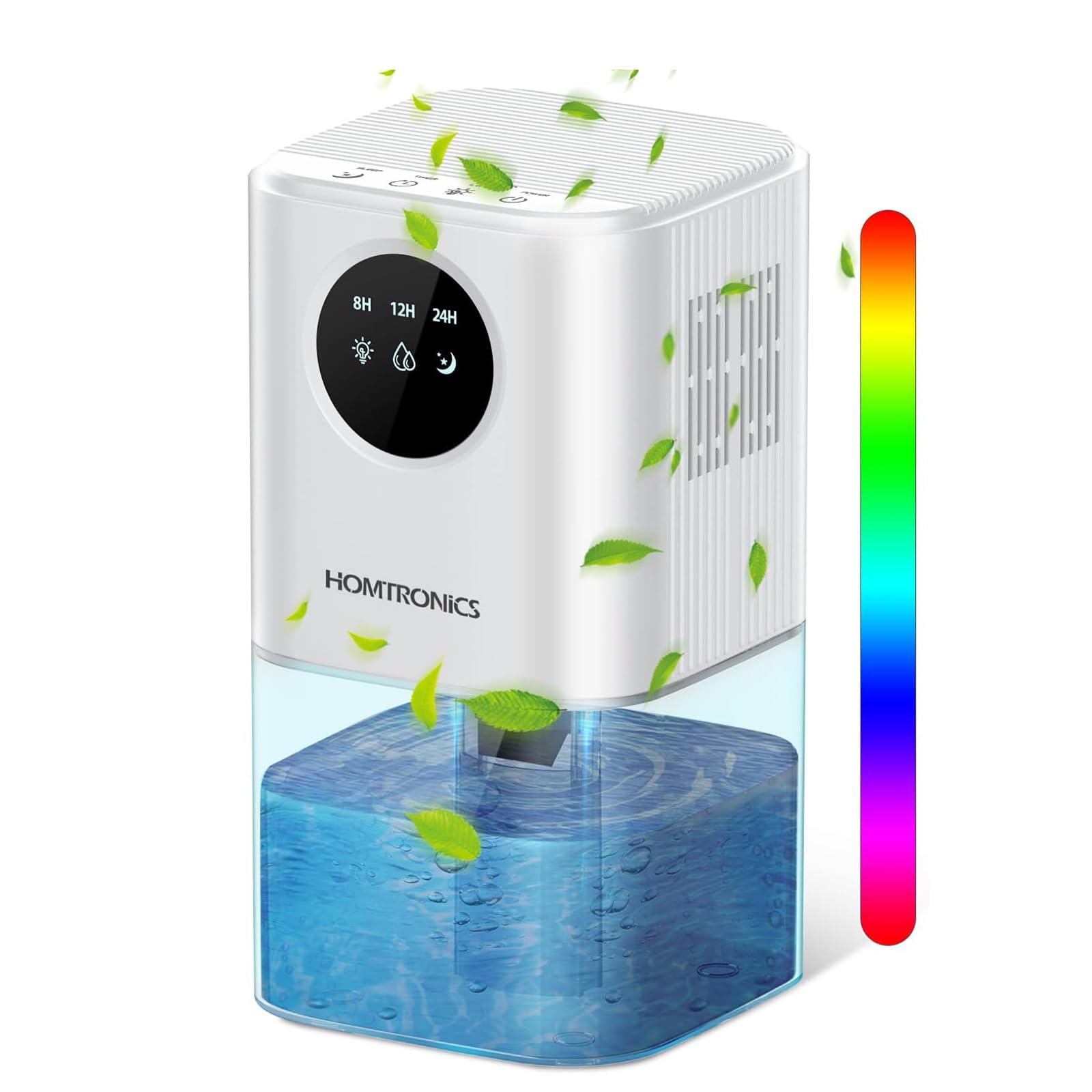
This compact dehumidifier is a solid choice for drying clothes indoors without causing damp, thanks to its quiet operation and efficient moisture removal.
Pros
- Quiet operation under 35dB
- Auto shut-off with tank full indicator
- Energy efficient with timed scheduling
Cons
- Best suited for small spaces only
- Water tank top can spill if knocked
- Limited capacity for larger rooms
We found this model easy to use and appreciated the timer function, which lets us run it for 8, 12, or 24 hours and prevents wasted energy. The auto shut-off is reliable and gave peace of mind when drying clothes in enclosed rooms.
Its quiet running was a clear advantage during night time or in busy workspaces, with barely any disturbance. The seven-coloured LED lights add a nice ambient touch, though this feature is more aesthetic than functional.
While the capacity fits rooms up to about 25 square metres, it doesn’t handle larger areas efficiently, so it’s ideal for bedrooms or small bathrooms. The removable tank is practical, but the lack of a secure lid means you need to be careful when moving it.
CURVAOP Dehumidifier for Clothes & Home
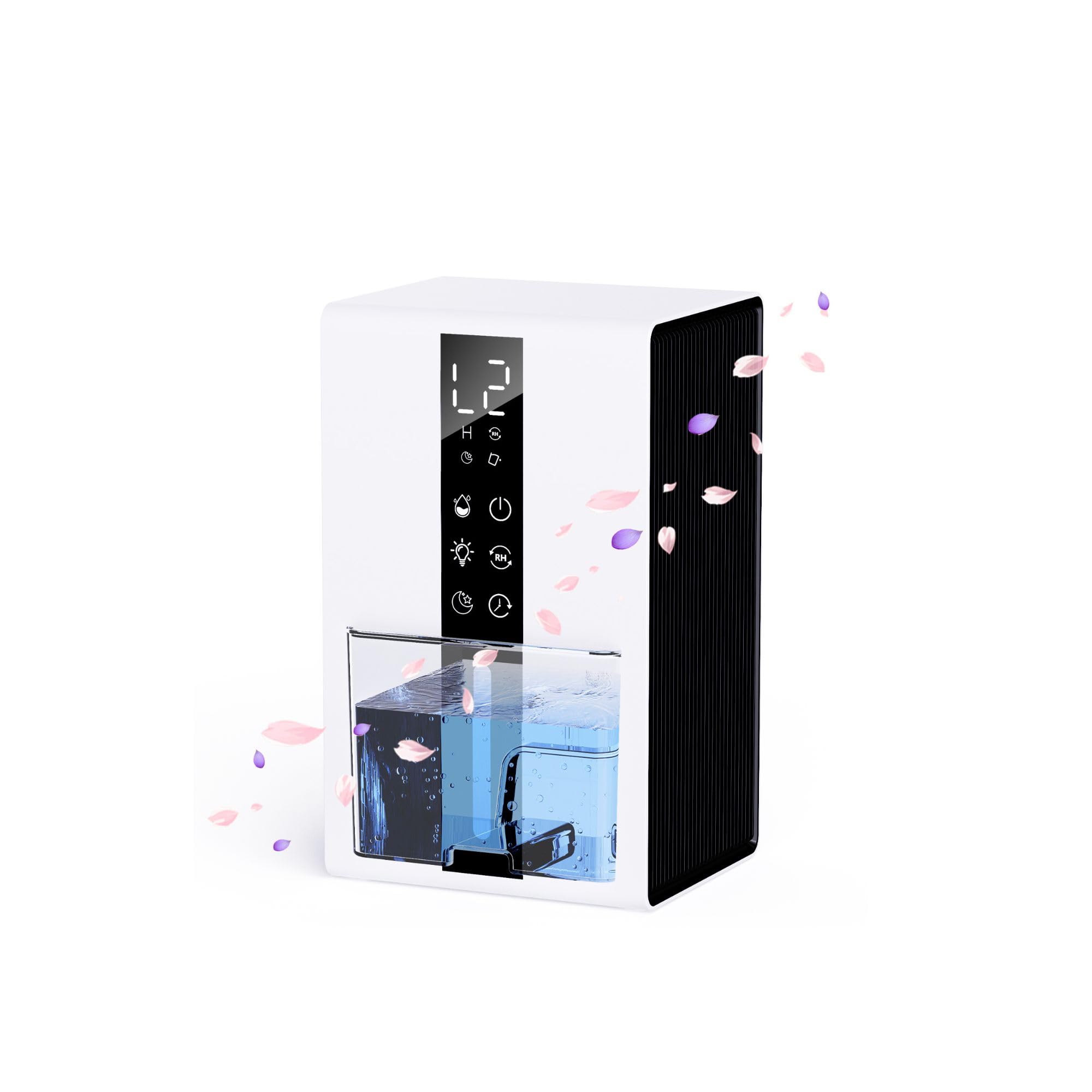
This dehumidifier is reliable and efficient for drying indoor clothes without causing damp problems in small spaces.
Pros
- Clear 1800ml water tank lets us see moisture levels easily
- Automatic on/off and energy-saving keeps running costs low
- Very quiet in sleep mode, ideal for bedrooms and night use
Cons
- Best suited for smaller areas, not large rooms
- Water tank requires regular emptying to maintain operation
- LED mood light might not appeal to everyone
We found the CURVAOP dehumidifier handles dampness impressively well, particularly useful for drying clothes in bathrooms or wardrobes. The visible tank is large enough for practical use without constant refills, and it’s straightforward to check water levels at a glance.
Its auto on/off function activates when humidity rises over 50%, so it works efficiently without wasting electricity. Running it through the night was easy thanks to the silent operation and discreet indicators, which avoided any disturbance.
The timer feature adds convenience by setting dehumidification for specific periods, while the mood light offers a nice touch though it’s optional. Overall, this model shows strong performance in keeping indoor air dry and preventing mould when drying laundry inside.
Buying Guide
When choosing products to dry clothes indoors without causing damp, we focus on features that control moisture effectively. Proper ventilation, absorbency, and space efficiency are key elements to consider.
We recommend prioritising dehumidifiers with adjustable humidity settings. These help maintain the right moisture level and prevent excessive dampness. Look for units with low noise levels if they will be used in shared living spaces.
Air movers or fans can speed up drying but should be used alongside good ventilation. Models with oscillation and multiple speed settings increase airflow without concentrating humidity in one area.
Drying racks with drip trays or moisture-absorbent materials reduce water accumulation on floors and surfaces. Collapsible or foldable designs help save space when not in use.
| Feature | Why It Matters | What To Look For |
|---|---|---|
| Ventilation | Prevents damp buildup | Adjustable vents, fans included |
| Moisture control | Regulates humidity | Humidity sensors, automatic shut-off |
| Size & portability | Fits available space & easy storage | Foldable, lightweight |
| Noise level | Usability in living spaces | Quiet operation |
In summary, we advise choosing products that balance drying efficiency with moisture management. Understanding the room size and typical humidity levels helps us select suitable tools for indoor drying without increasing the risk of damp.
Frequently Asked Questions
We focus on managing moisture and air circulation effectively when drying clothes indoors. Using appropriate devices and methods helps reduce risks linked to damp and mould in the home.
What are the health risks of drying clothes indoors?
Drying clothes indoors increases indoor humidity, which can promote mould growth. Mould spores can cause respiratory problems, allergies, and worsen asthma symptoms.
How can I quickly dry my clothes indoors?
Place clothes near a heat source or in a well-ventilated room. Use a fan or dehumidifier to speed up evaporation. Space clothes apart to improve airflow between items.
Is it possible to dry clothes indoors at high humidity levels such as 70% to 90%?
High humidity slows down drying and increases the chance of damp problems. Using a dehumidifier or opening windows can reduce humidity levels to aid drying.
Which dehumidifier is best for drying clothes?
Choose a dehumidifier with a drying mode or continuous drainage option. Look for units with a capacity of at least 10-20 litres per day, suitable for the room size.
How can I prevent mould when drying clothes indoors?
Avoid drying clothes in small, poorly ventilated spaces. Use fans, open windows, or run a dehumidifier. Remove wet laundry promptly and clean areas prone to moisture regularly.
What are the best practices for drying clothes indoors in the UK to avoid damp?
Dry clothes in a well-ventilated room with a heat source if possible. Use a dehumidifier during wetter months. Avoid overloading drying racks and air clothes outside when weather permits.
Last Updated on 1 December 2025 by YEG